


We hear all the time “inspect your concrete plant”, but what does that really mean?
[caption id="attachment_2432" align="alignnone" width="300"]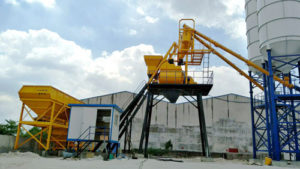 concrete batching plant,[/caption]
First, I think we have to acknowledge that there are a couple of types of inspections.
Basic or Simple Inspection
Semi-Full Inspection
Full Inspection or Complete Inspection
Depending on how much concrete you are producing each hour and day will determine how often you should conduct each inspection. If you only produce a few hundred yards per day you may be able to have a basic inspection each day. If you are producing a hundred yards or more per hour all day, you should probably be doing a basic inspection a couple of times each day. At a minimum we would recommend a basic inspection each day, a semi-full inspection weekly and a full inspection quarterly.
Basic Inspection
Visually inspect the concrete plant from normal access areas.
Pay special attention to conveyor belt tracking and belt condition
Bearing making noise, wiggling, or having lots of grease or even smoke.
Look specifically at head and tail pulleys on conveyors and head and tail of augers
Gates opening and closing without obstruction
Air compressor
Pay close attention to
New or unusual sounds
Gates or other moving parts not moving smoothly – jerking
Anything that appears out of its normal place or not operating as normal
Semi Full Inspection
When completing a Semi-Full Inspection it is also a good idea to preform maintenance tasks. This inspection requires all the steps of the basic inspection but also requires you to access the hard to get to places that you can’t see for a basic inspection
Visually inspect each part (paying special attention to moving parts) on each of the following systems.
Aggregate bins, aggregate batchers, transfer conveyors, gates
Cement Silo Gates, Cement Batcher, Augers, discharge boots
Water Meter, Hoses, Scale (if applicable), discharge boots
Air Compressor, air fittings, hoses, actuators, solenoids
All other systems you may be operating (generator, hydraulics, etc.)
Identify any unusual sounds, motions movements, etc.
Full Inspection
The full inspection includes all steps of the both the basic and Semi-Full inspections, but the full inspection also includes the most difficult places to access.
Open and Visually Inspect Cement Silo and Batcher Dust Collectors
Look for signs of water leakage, build up, blockage or signs of broker bags or plugged cartridges.
When the inside of the dust collector is extremely dusty, it is usually a good sign the bags or cartridge need to be replaced. If the collector is self-cleaning, it could also be an indicator the collector is not properly functioning.
Empty Bins and Batchers and inspect high impact areas
Look for signs of work steel, corrosion or rust
Welding in a steel liner plate or urethane sheet is much easier when wear is addressed early and before all weld-able metal has deteriorated.
concrete batching plant,[/caption]
First, I think we have to acknowledge that there are a couple of types of inspections.
Basic or Simple Inspection
Semi-Full Inspection
Full Inspection or Complete Inspection
Depending on how much concrete you are producing each hour and day will determine how often you should conduct each inspection. If you only produce a few hundred yards per day you may be able to have a basic inspection each day. If you are producing a hundred yards or more per hour all day, you should probably be doing a basic inspection a couple of times each day. At a minimum we would recommend a basic inspection each day, a semi-full inspection weekly and a full inspection quarterly.
Basic Inspection
Visually inspect the concrete plant from normal access areas.
Pay special attention to conveyor belt tracking and belt condition
Bearing making noise, wiggling, or having lots of grease or even smoke.
Look specifically at head and tail pulleys on conveyors and head and tail of augers
Gates opening and closing without obstruction
Air compressor
Pay close attention to
New or unusual sounds
Gates or other moving parts not moving smoothly – jerking
Anything that appears out of its normal place or not operating as normal
Semi Full Inspection
When completing a Semi-Full Inspection it is also a good idea to preform maintenance tasks. This inspection requires all the steps of the basic inspection but also requires you to access the hard to get to places that you can’t see for a basic inspection
Visually inspect each part (paying special attention to moving parts) on each of the following systems.
Aggregate bins, aggregate batchers, transfer conveyors, gates
Cement Silo Gates, Cement Batcher, Augers, discharge boots
Water Meter, Hoses, Scale (if applicable), discharge boots
Air Compressor, air fittings, hoses, actuators, solenoids
All other systems you may be operating (generator, hydraulics, etc.)
Identify any unusual sounds, motions movements, etc.
Full Inspection
The full inspection includes all steps of the both the basic and Semi-Full inspections, but the full inspection also includes the most difficult places to access.
Open and Visually Inspect Cement Silo and Batcher Dust Collectors
Look for signs of water leakage, build up, blockage or signs of broker bags or plugged cartridges.
When the inside of the dust collector is extremely dusty, it is usually a good sign the bags or cartridge need to be replaced. If the collector is self-cleaning, it could also be an indicator the collector is not properly functioning.
Empty Bins and Batchers and inspect high impact areas
Look for signs of work steel, corrosion or rust
Welding in a steel liner plate or urethane sheet is much easier when wear is addressed early and before all weld-able metal has deteriorated.
concrete batching plant,[/caption]
First, I think we have to acknowledge that there are a couple of types of inspections.
Basic or Simple Inspection
Semi-Full Inspection
Full Inspection or Complete Inspection
Depending on how much concrete you are producing each hour and day will determine how often you should conduct each inspection. If you only produce a few hundred yards per day you may be able to have a basic inspection each day. If you are producing a hundred yards or more per hour all day, you should probably be doing a basic inspection a couple of times each day. At a minimum we would recommend a basic inspection each day, a semi-full inspection weekly and a full inspection quarterly.
Basic Inspection
Visually inspect the concrete plant from normal access areas.
Pay special attention to conveyor belt tracking and belt condition
Bearing making noise, wiggling, or having lots of grease or even smoke.
Look specifically at head and tail pulleys on conveyors and head and tail of augers
Gates opening and closing without obstruction
Air compressor
Pay close attention to
New or unusual sounds
Gates or other moving parts not moving smoothly – jerking
Anything that appears out of its normal place or not operating as normal
Semi Full Inspection
When completing a Semi-Full Inspection it is also a good idea to preform maintenance tasks. This inspection requires all the steps of the basic inspection but also requires you to access the hard to get to places that you can’t see for a basic inspection
Visually inspect each part (paying special attention to moving parts) on each of the following systems.
Aggregate bins, aggregate batchers, transfer conveyors, gates
Cement Silo Gates, Cement Batcher, Augers, discharge boots
Water Meter, Hoses, Scale (if applicable), discharge boots
Air Compressor, air fittings, hoses, actuators, solenoids
All other systems you may be operating (generator, hydraulics, etc.)
Identify any unusual sounds, motions movements, etc.
Full Inspection
The full inspection includes all steps of the both the basic and Semi-Full inspections, but the full inspection also includes the most difficult places to access.
Open and Visually Inspect Cement Silo and Batcher Dust Collectors
Look for signs of water leakage, build up, blockage or signs of broker bags or plugged cartridges.
When the inside of the dust collector is extremely dusty, it is usually a good sign the bags or cartridge need to be replaced. If the collector is self-cleaning, it could also be an indicator the collector is not properly functioning.
Empty Bins and Batchers and inspect high impact areas
Look for signs of work steel, corrosion or rust
Welding in a steel liner plate or urethane sheet is much easier when wear is addressed early and before all weld-able metal has deteriorated.
“Do you see over yonder, friend Sancho, thirty or forty hulking giants? I intend to do battle with them and slay them.”
— Don Quixote






leave a comment